
Can an SMSFs invest in Bitcoins?

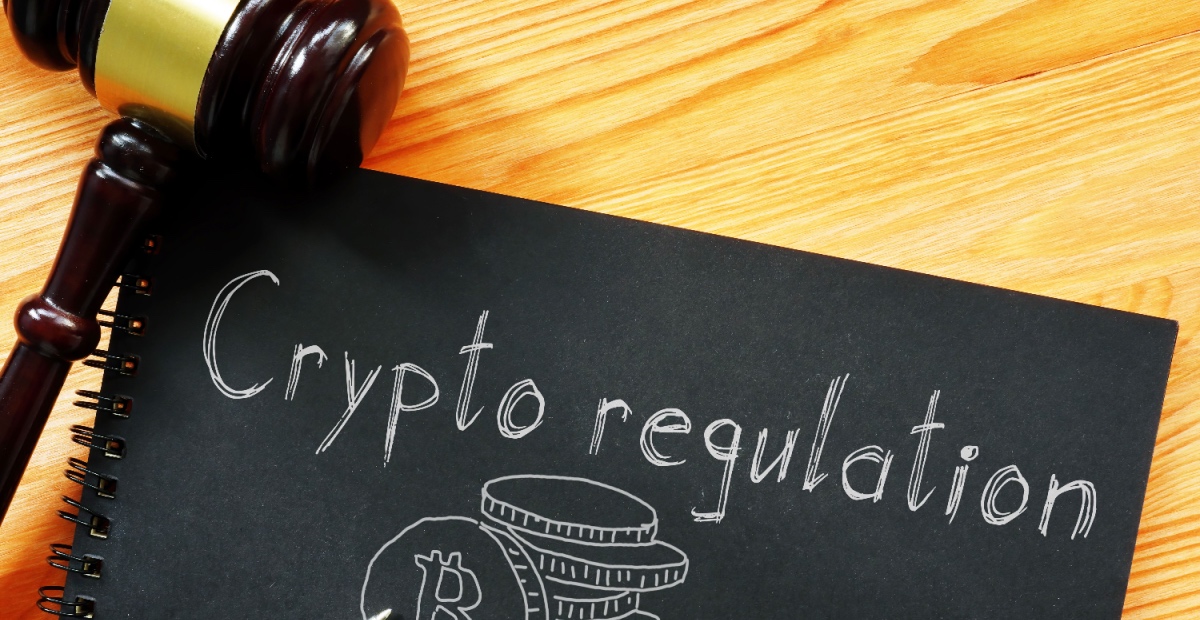
SUPERCentral’s special counsel, Superannuation, Michael Hallinan explains that SMSFs can invest in cryptocurrency but need to meet relevant tests.
Hallinan says that on the question of whether SMSFs can invest in Bitcoins, Yes is the answer and notes recent news coverage that, “… booming demand for Bitcoin has lifted funds under management for Australian crypto exchange-traded funds above $1 billion for the first time.” This figure from late 2025 includes SMSF participation in this asset growth.
The emergence of Bitcoins and other cryptocurrencies as a form of virtual currency is growing in popularity, though opinions differ widely on whether or not they are a worthwhile investment, as opposed to a usable currency.
For investors and traders looking to venture out from investing in the more traditional types of collectable and personal use assets such as coins, medallions and bank notes, investing in bitcoins or other forms of cryptocurrencies may be worth considering for those wanting to diversify their investment portfolios.
What is a Bitcoin?
Bitcoin is a type of currency that can be used for direct payment between people and businesses.
Bitcoins differ from normal currency in that it is a ‘digital’ type of currency, it operates independently of any government or bank, is substantially unregulated, and can be stored in a digital format only.
Each Bitcoin has its own unique identifier and can be individually traced, meaning no two bitcoins are the same and all are protected by a private key that confers on its holder the right to reassign a unit in a ledger – otherwise known as the blockchain – to another user.
The blockchain records details of every transaction that the particular bitcoin has engaged in and therefore the ownership of every single bitcoin in circulation. It’ll be interesting to see how much computer space that takes up in 50 years’ time.
The verification process is conducted by “miners”, who ensure that all the information concerning the status of any given bitcoin is correct and updated every time a transaction is made.
These digital transactions can be carried out on smartphone apps and online accounts which allow people to transfer their coins to others in payment for goods and services.
Can an SMSF invest in Bitcoins?
Whether or not Bitcoin is a suitable investment within a SMSF can depend on the risk appetite of the members, their age, the amount invested and the total funds of the SMSF.
There are a number of key issues that an SMSF should consider, including:
1. whether an investment in Bitcoins would satisfy the ‘sole purpose test’; and
2. whether the investment strategy of the SMSF will be satisfied.
Does the investment satisfy the ‘sole purpose test’?
The ‘sole purpose test’ will be satisfied if an SMSFs sole purpose is to provide retirement benefits for its members. However, difficulty may arise in trying to satisfy the sole purpose test as an SMSF cannot directly or indirectly provide financial assistance or benefits to its members prior to their retirement, including use of or access to the assets (except money and listed securities) of the SMSF.
The Australian Taxation Office has taken the viewpoint that Bitcoin is not to be classified as ‘money’, meaning that an SMSF cannot acquire bitcoin from its members, but may acquire bitcoins through an exchange.
An SMSF may be able to satisfy this requirement, if it could be shown that the SMSF’s bitcoins are held securely, and that the trustee of the SMSF, and not the members, is controlling any movement of the bitcoins.
Any movement or transfers between the SMSF and a member, even temporarily, could cause significant issues under the sole purpose test.
The investment strategy of the SMSF
The current rules regarding an SMSF investment risk are based within the “investment covenants” framework in s 52B of the Superannuation Industry (Supervision) Act 1993 (Cth) (“SIS Act”).
As part of the investment strategy SMSF trustees will need to consider a number of aspects relating to bitcoin including the risk in buying, holding and realising a bitcoin investment, the likely return , diversification, liquidity, costs and tax consequences.
As part of this framework, an SMSF trustee must exercise due diligence in relation to all investments made by the SMSF. The issue here is the risky nature of bitcoins as an investment. Investing in bitcoins, may not be a prudent SMSF investment, especially for those approaching retirement age, where stable income-generating assets and minimal risk of significant capital loss are important.
But there may be a role for bitcoin as part of an otherwise appropriate strategy. For example, the trustee may be able to argue that having 2-5% of the total fund’s assets invested in bitcoin does not constitute a material risk for the fund and yet adds the potential to increase the fund’s overall investment performance.
Whatever the decision, bitcoins as an investment must be approved in the SMSF’s investment strategy.
Note also that it may be necessary to amend the SMSF’s trust deed in order to allow investment in bitcoins.










Based on this principle, advisers or super call centres recommending portfolio switches into Balanced Industry super options should be caught…
Members who paid $1.20 for something that was actually worth $1.00 should be compensated if the valuations were incorrect. Where…
Lying pigs! They want to use 10 years because they are getting beaten now that they are all "HUGGING the…
As reported in this publication last year, MWL’s Australian Financial Services Licence was cancelled by ASIC on 25 August 2025.with…
Interprac should be looking at a class action by the exiting adviser for unfair terms in an insurance contract!