
Global growth below trend but rising in 2023

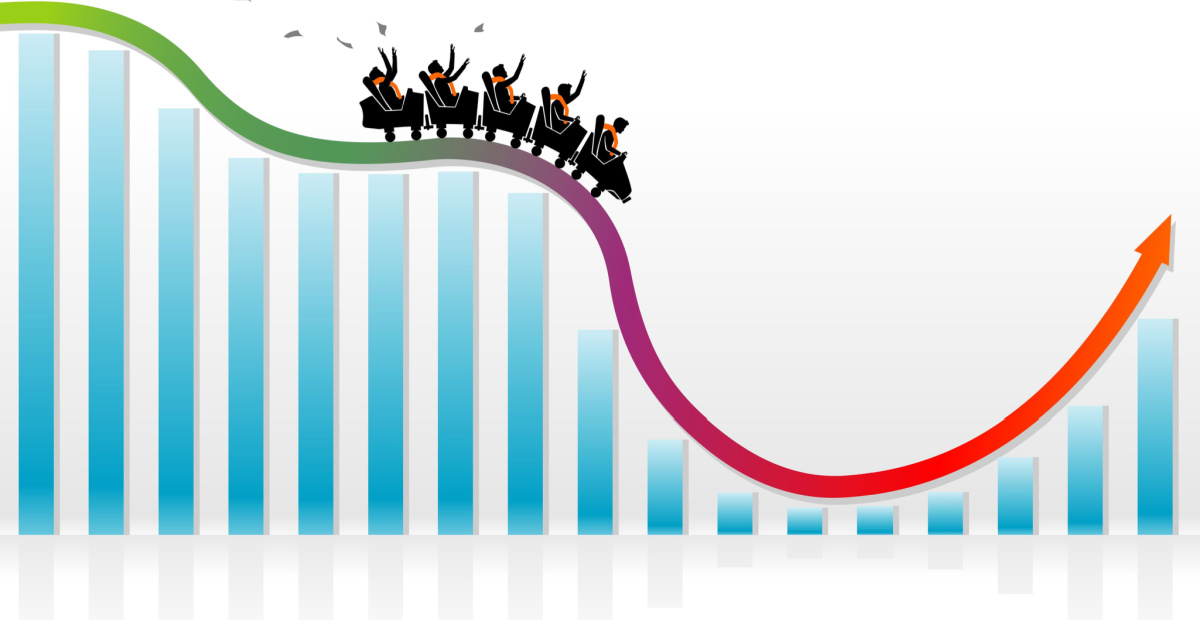
With current global growth below and inflation above expectations and continued tightening of global policy and financial conditions, the outlook for the next year is slightly more positive, with expectations that a recovery regime will begin to unfold.
According to Invesco’s 2023 Investment Outlook, the market is currently in the contraction phase of the economic cycle and with global growth expected to continue to decelerate in the near term.
However, the path ahead points to inflation moderation next year, with markets beginning to anticipate a pause in central bank tightening taking place before the end of the first half of 2023, which would in return enable an economic recovery to unfold later in the year, according to Invesco’s base case scenario.
However, under alternative scenario, in which inflation remains persistent with central banks unable to pause tightening, the economies would be expected to remain in contraction.
“We think the contraction globally will be a modest soft patch, although some economies will be hit harder than others,” the report said.
“If inflation remains stubbornly high, we assume central banks will continue tightening monetary policy for longer. In our view, this would maintain the contraction regime for longer than we expect in our base case.
“We would expect this to increase the probability of a global recession, resulting in worse growth and further pain in risk assets.”
Apart from the energy supply shock, stemming from the war in Ukraine which would be likely to constrain monetary policy tightening in the euro area and the UK, the report also stressed the importance of China’s property market and COVID-19 woes as significant events which would be ‘setting the tone for 2023’.
It said that despite the gradual re-opening of China expected in Q2 2023 and stabilising property market expected leading to mid single digit gross domestic product (GDP) growth, China’s growth would remain murky, according to the report.
According to Invesco, risks would be to the downside in the first half of the year due to the weaker export environment and tepid domestic household spending with much stronger prospects in the second half owing to the reopening.
On top of this, China would continue to shift its political economy which now targets self-sufficiency, with national security and technology self-sufficiency becoming top priorities.
“Priority has shifted towards developing domestic consumption and strengthening supply chains to drive longer-term growth, and we favour sectors that receive policy support, such as electric vehicles, alternative energy, hard tech, and local consumer brands,” Invesco’s Outlook said.
Further to that, the fund manager expected that in 2023 a strong US dollar and tightening monetary policy would likely add pressure on emerging markets risk assets, but to different degrees across countries.
It predicted that emerging market economies would be “fighting a war on two fronts”.
“First, inflation has been a major problem despite earlier and stronger rate hikes in EMs than in the US. Many EM countries’ inflation rates are above target – especially those geographically closest to the war in Ukraine.
“Second, the strong US dollar has exported inflation and cut financial flows to EMs where cross-border credit is mostly dollar-denominated.”
This would mean that valuations in the US dollar were looking stretched, and the US dollar would be expected to decline when the US Fed is believed to stop raising rates.
“When the dollar begins to weaken, we would expect EM assets to benefit.”










Is it not a cost of completing the transaction? Why should it be removed from any analysis, applicable govt charges…
Misleading figures. We’d have millions and millions removed in our client base with LS. Almost 100% came straight back in…
Financial planners, you know exactly what will happen next. Get your wallets out- Cslr bill coming your way!
Another day and yet another shouty SMC story running about trying to push regulators to enter union super into Australian…
These funds should be a lot more concerned about their investment returns, which are starting to look very sick. Waiting…