
Active managers urged to find niche to solidify market position


As more active managers continue to enter – and crowd – the exchange traded fund (ETF) space in the effort to slow down the market share gains recorded by their passive counterparts, Morningstar has urged that they find their niche to better solidify their position.
The warning was specifically levelled at active managers focused primarily on “standard” equity and bond products as these can be easily reproduced in passive format, while those operating in more “differentiated areas” such as private credit or specialist fixed income strategies could leverage a stronger hold on their share of investor appetite.
The research house’s zoom-in on Australian asset managers in Q4 2025 found “non-traditional” fixed income managers recorded stronger flows on average among products managed by active managers over the last 25 years.
While active ETF flows have seen an upswing of late, given an increasing number of active managers making the pivot, passive ETFs have still managed to hold approximately 90 per cent in market share by funds under management (FUM) over the last eight years. This is attributed to the active manager combination of high fees and “underwhelming” performance, which investors find difficult to justify.
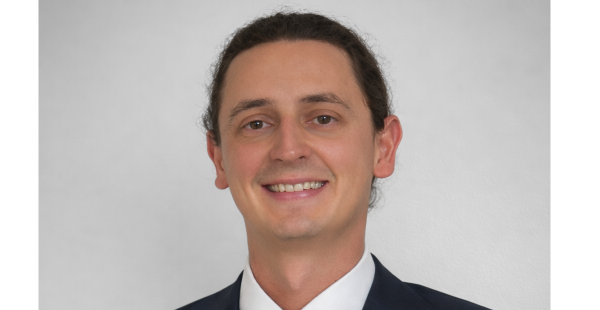
“We view traditional active management as nearly a zero-sum game, with firms growing by taking market share from peers rather than structurally winning against passive investments. Average 12-month net flows for our covered firms were negative 5.6% of managed funds in the September quarter of 2025, roughly in line with the June quarter,” report author and Equity Analyst at Morningstar, Shaun Ler, said.
“This is below the 5.4% and 4.2% growth recorded in the Australian and global markets, respectively, over the same period—suggesting market share losses at the cohort level.
“Traditional active managers are facing consolidation, with average or weak performers at risk of losing assets or shutting down. The growth of passive investments, which offer index exposure at low cost, has left active managers who cannot beat their benchmarks in an increasingly difficult position.
“To attract and keep client assets, active managers need to consistently outperform, which is challenging to achieve in practice.
“Overall, our covered firms lack the consistent outperformance required to regain market share lost to passive ETFs and industry funds. Most achieve average returns relative to peers over longer periods, showing how difficult it is for active managers to consistently beat benchmarks.
“Without lasting and meaningful performance improvements, firms will need to adopt more defensive strategies such as adjusting staff compensation structures or forming external partnerships to protect market share and earnings.
“We expect ongoing fee pressure across all our covered firms’ strategies through fiscal 2030. Some firms, like Pinnacle, have resisted fee compression by moving into higher-margin asset classes.
“Others, such as L1 Group and Magellan, maintain higher blended margins either due to their smaller exposure to institutional mandates or have a large proportion of legacy FUM earning higher fees. Nonetheless, we see the overall fee trend as downward, with passive fund competition continuing to drive fee pressure and constrain earnings growth.”
While Ler confirmed that the cohort of asset managers covered in the analysis are expected to deliver “lumpy” medium-term flows given current expensive equity prices and the potential for external shocks to affect resilience, Perpetual and GQG were singled out as offering better relative value for investors.
“We believe the market is not ascribing sufficient value to Perpetual’s future cash flows. While investor concerns around outflows and margin compression—particularly in Asset Management—are valid, we believe these risks are already incorporated into our forecasts. We expect market returns to compound on the firm’s sizable funds under management, helping to offset redemptions and support revenue.
“The firm is also executing a simplification strategy, aimed at reducing duplicate costs. Additional earnings support comes from Corporate Trust, the segment facing the least competitive pressure. For this segment, we expect steady volume growth, resilient fees, and the cross-selling of ancillary products to underpin a more stable earnings stream.
“We believe the risk of redemptions and earnings compression at GQG—stemming from recent underperformance—is already reflected in our forecasts. Notably, our projected net outflows average 4% of funds under management per year through to 2029, below the industry base rate of around 0% for active equity managers.
“While near-term performance faces headwinds, we do not anticipate seismic mandate redemptions. Team stability remains intact, and there are no reputational issues that would trigger mass redemptions, as occured with Magellan in 2022. At USD 164 billion in FUM, GQG is capable of growing FUM through portfolio return compounding even if net flows are challenged.
“We also expect the firm’s below-peer average fees and strong asset consultant ratings to mitigate excessive redemptions.”









They can be if not managed correctly. Every product recommendation can be perceived as conflicted one way or another. The…
Wonder if this is Alan Kirkland?
SMAs run by a third party with no relationship to the adviser, and no inhouse product from the SMA provider,…
I agree with other posters. $300K is grossly misleading. When compared to the licensee I was previously attached to, I'm…
only took 25 years