
Gains in gender equality erased as 2025 ends at two-year low

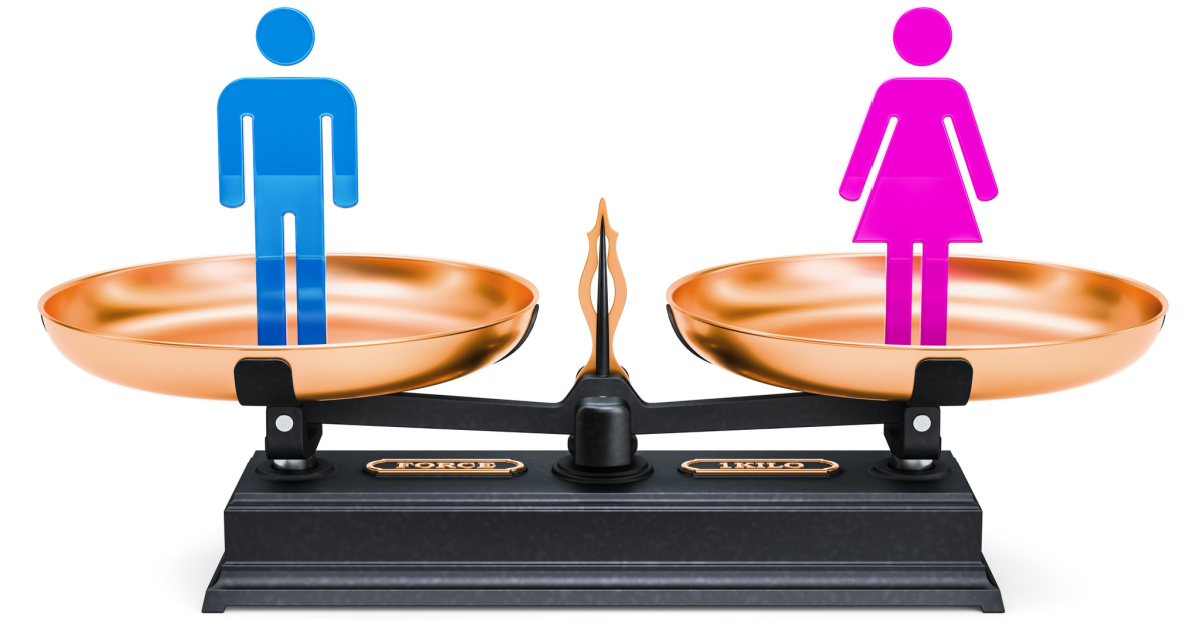
The latest quarterly update to the Financy Women’s Index (FWX) tracking Australia’s progress on gender equality has revealed any and all gains seen in 2025 have practically reversed, with the index ending the year at its lowest point since December 2023.
The December 2025 quarterly reading (77.76 points) represented a 0.24-point drop year-on-year and a 1.24-point decline from the previous quarter, mainly driven by “widening gender gaps” in the Underemployment sub-index and “stalled progress” in the Pay, Unpaid Work and Employment sub-indices.
Education and Superannuation were the only two sub-indices to see their gaps narrow significantly, with the years remaining to achieve economic equality falling from 348.6 in December 2024 to 212.8 in December 2025 and 17.2 to 13.8, respectively. ASX 200 Boards fell slightly from 5.0 to 4.6 and the Gender Pay Gap dropped by 0.8 points from 29.9 to 29.1.
With setbacks in Unpaid Work (+1.9 points), Underemployment (+1.0 points) and Employment (+0.7 points), Bianca Hartge-Hazelman, author of the FWX Report, said the research indicated women had taken on the responsibility of being the “economy’s pressure valve” by absorbing the impact of increasingly volatile conditions.
“The 2025 results signal a fragile state of progress which is particularly concerning given rising economic uncertainty,” she said.
“While we celebrate significant gains in Superannuation and Education this International Women’s Day, the widening gender gaps in Underemployment and Unpaid Work prove that gender equity progress is not yet cemented in foundations strong enough to withstand economic pressures.”
Dr. Shane Oliver, chief economist at AMP and member of the FWX Advisory Committee, agreed this trend was highly concerning.
“It is disappointing to see that the steadily improving trend in the Index has given way to a more volatile and constrained trend ever since the pandemic,” he said.
“This indicates that women may be bearing a disproportionate share of the cost of the higher levels of economic uncertainty that we have been seeing since 2020.
“The escalating war between the US, Israel and Iran will just continue the period of economic uncertainty.”
Despite women feeling the brunt of a tight labour market amidst unpaid work increasing especially for those in the peak demographic for child-rearing, the combination of higher female workforce participation and legislated increases to the Superannuation Guarantee (SG) have helped the median life-time balance for women ($54,300) further close in on that for men ($68,600).
A similar trend was reflected in the education space, with female student enrolments in high-earning fields such as information technology (IT), engineering, architecture and building overtaking male enrolments in 2025.









Being an actual victim of First Guardian I am disgusted that ASIC fail to do the basics. This fund should…
The other big barrier to superannuation stapling is HR employees who simply ignore the requirement, and push new hires towards…
ASICkjoke is incompetent. Our system half a century ago put in place requirements around having trusts, funds, companies, and SMSFs…
Yep layer upon layer upon layer upon layer of useless box ticking compliance. That’s ASIC answer to everything for over…
ISFs should be called : Profits to Union & Bikie bosses Funds