
HALO trend rides momentum as AI disruption continues

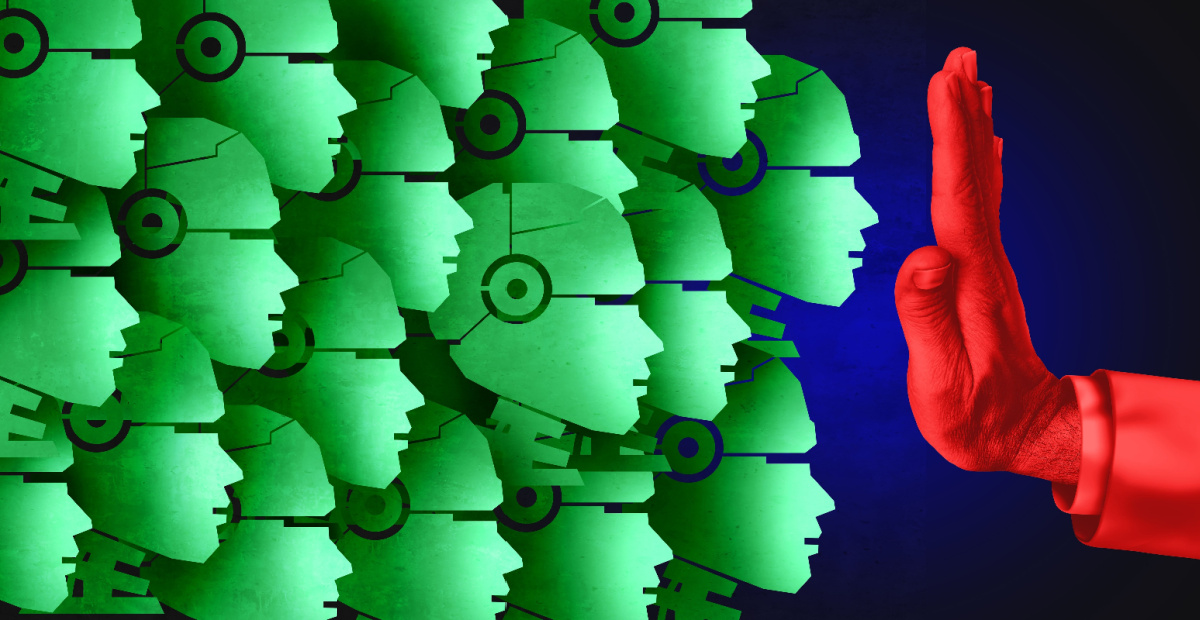
Companies belonging to the latest emerging investment trend, ‘Heavy Assets, Low Obsolescence’ (HALO), are set to reap the benefits of artificial intelligence (AI)-fuelled disruption in asset-light sectors.
According to commentary from Annabelle Miller, Principal, Investment at ECP Asset Management, companies grounded in physical assets or scalable infrastructure present an attractive offering for investors looking to safeguard against AI disruption.
“In recent years, asset-light companies such as software and services demonstrated the ability to generate revenue and accelerate growth without the need for physical assets and infrastructure,” she said.
“AI has proven it can easily disrupt companies built on intangible intellectual property particularly in the software space.
“But what AI cannot do is disrupt those businesses which monetise services through a scaled physical asset or piece of infrastructure. Think about pipelines, powerlines or businesses monetising large installed bases of equipment.”
Miller noted the logistics and salvage, industrial engineering, life sciences, semiconductors, material and mining and consumer staples sectors in particular as opportunity breeding grounds.
“As AI continues to disrupt, there are companies which investors should consider that have low risk of AI replication or disruption and high barriers to entry,” she said.
“Furthermore, many of these businesses will benefit from integrating AI tools into their workflows to improve efficiency and productivity of their physical asset base.
“One example in the life sciences space is Sartorius Stedim Biotech. The company owns high-security and ultra regulated physical spaces in France and Korea where drugs are manufactured.
“The company itself doesn’t produce drugs, rather it partners with drug companies at the earliest stages of development to assist in the manufacturing process for an emerging drug molecule.
“From the earliest stages of clinical development all the way through to commercial production, Sartorius’ equipment and consumables are specified in the drug master file for each drug processed in its facility.
“These drug master files are approved by the relevant regulatory body embedding Sartorius in the manufacturing process and making switching almost impossible.
“This company too is resilient to AI as no matter how many drugs AI formulates, a facility is still needed for production of the physical drugs.”
Miller also singled out the Taiwan Semiconductor Manufacturing Company as a “critical utility in the technology landscape”, given its “monopoly” in the advanced semiconductor manufacturing and development space leveraged by everything from smartphones to AI data centres.
“While semiconductor designs change, the need for a high end foundry does not. TSMC is entrenched in their customer’s product roadmaps, locking them into their physical manufacturing ecosystem,” she said.
“The TSMC ‘way’ is grounded in physics and chemistry, developed and refined over years, making it virtually impossible for competitors to replicate and is resilient to AI disruption. More likely we will see the company’s growth accelerate with the growth and expansion of AI.”







ASIC merely needs to divide the revenue from company searches by the number of registered companies and increase review fees…
ASIC merely needs to divide the revenue from company searches by the number of registered companies and increase review fees…
The proposal to disallow advisers to have SOA fees deducted from members' Super accounts will only serve to make financial…
Adviser gets banned. How does that help his clients?
As they say in the Bible, what you sow, you reap. This is what happens when members of a super…