
RBA leaves rate unchanged in move not expected by market

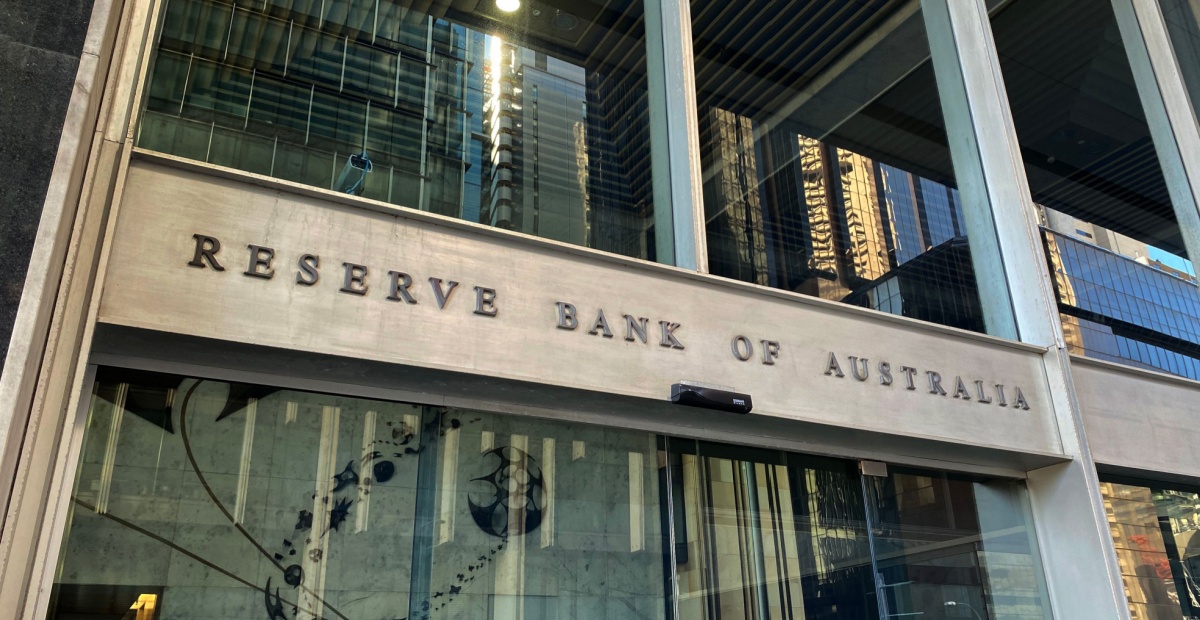
The Reserve Bank of Australia (RBA) has delivered its fourth monetary policy decision of the year, unexpectedly leaving the official cash rate unchanged at 3.85 per cent.
The result comes despite the latest monthly release of Consumer Price Index (CPI) indicators for May showed the central bank’s preferred unit of underlying inflation measurement had recovered from a higher reading in April (2.8 per cent), with annual trimmed mean inflation falling to 2.4 per cent in May.
The RBA also released a “record of votes” for the first time today, confirming the policy decision was made by majority with six members in favour and three against the decision.
“Inflation has fallen substantially since the peak in 2022, as higher interest rates have been working to bring aggregate demand and supply closer towards balance,” the RBA board said in its statement today.
“In the March quarter, headline inflation, which has partly been affected by temporary cost of living relief, was at the midpoint of the target range while trimmed mean inflation was at 2.9 per cent. The baseline forecast in May was for underlying inflation to continue to moderate to around the midpoint of the 2–3 per cent range with the cash rate assumed to follow a gradual easing path.
“While recent monthly CPI Indicator data suggest that June quarter inflation is likely to be broadly in line with the forecast, they were, at the margin, slightly stronger than expected. With the cash rate 50 basis points lower than five months ago and wider economic conditions evolving broadly as expected, the Board judged that it could wait for a little more information to confirm that inflation remains on track to reach 2.5 per cent on a sustainable basis.”
The board also indicated that the decision to leave the official cash rate unchanged, despite many market analysts and economists suggesting there was enough evidence to warrant what would have been the third cash rate reduction of the year, was attributed to the “elevated” levels of global uncertainty given the lasting and unknown impacts of US trade policy and tariffs.
“Financial market prices have rebounded with an expectation that the most extreme outcomes are likely to be avoided. Trade policy developments are nevertheless still expected to have an adverse effect on global economic activity, and there remains a risk that households and firms delay expenditure pending greater clarity on the outlook,” the central bank’s statement said.
“Setting aside overseas developments, private domestic demand appears to have been recovering gradually, real household incomes have picked up and there has been an easing in some measures of financial stress. However, businesses in some sectors continue to report that weakness in demand makes it difficult to pass on cost increases to final prices.
“At the same time, various indicators suggest that labour market conditions remain tight. Measures of labour underutilisation are at relatively low rates and business surveys and liaison suggest that availability of labour is still a constraint for a range of employers. Looking through quarterly volatility, wages growth has softened from its peak but productivity growth has not picked up and growth in unit labour costs remains high.
“There are uncertainties about the outlook for domestic economic activity and inflation stemming from both domestic and international developments. The March quarter national accounts confirmed that domestic demand has been picking up over the past six months. The forecasts in May were for growth in household consumption to continue to increase as real incomes rise.
“There is a risk that the pick-up is a little slower than earlier expected, which could result in continued subdued growth in aggregate demand and a sharper deterioration in the labour market than currently expected. Alternatively, labour market outcomes may prove stronger than expected, given the signal from a range of leading indicators.
“There are also uncertainties regarding the lags in the effect of recent monetary policy easing and how firms’ pricing decisions and wages will respond to the balance between demand and supply for goods and services, tight conditions in the labour market and continued weak productivity outcomes.”
The RBA board also confirmed it would remain “cautious” and made the decision to wait for further information that determined inflation “remains on track to reach 2.5 per cent on a sustainable basis”.
“It noted that monetary policy is well placed to respond decisively to international developments if they were to have material implications for activity and inflation in Australia,” the statement said.
“The Board will be attentive to the data and the evolving assessment of risks to guide its decisions. In doing so, it will pay close attention to developments in the global economy and financial markets, trends in domestic demand, and the outlook for inflation and the labour market. The Board is focused on its mandate to deliver price stability and full employment and will do what it considers necessary to achieve that outcome.”
Market players have slowly begun to react to the news that conflicted with several original forecasts.
“The pathway to further rate cuts by the RBA this year will depend on greater evidence that demand is weakening and more progress on disinflation,” Vanguard senior economist, Dr Grant Feng, said.
“The sustainability of steady disinflation remains uncertain due to the tight labour market and expansionary fiscal policy. Additionally, although the global backdrop has delivered big changes and considerable uncertainty since the beginning of April, the US-China trade war truce has significantly relieved growth concerns. Therefore, both domestic and global conditions warrant a cautious policy stance on interest rates.
“Although Australia’s quarterly trimmed mean CPI has fallen back to the target bank for the first time since Q4 2021, it is just below the upper limit and will likely stay in the top half for at least in the near term. Moreover, the labour market remains tight, with the unemployment rate still well below the RBA’s estimate of full employment. This, coupled with weak productivity, will continue to exert upward pressure on unit labour costs, prolonging the disinflation process.
“On the external front, the direct impact of US trade policy on Australia’s economy is likely to be limited, given our comparatively small direct trading relationship with the US and the ease of substitutability of commodity exports across markets. On the inflation front, Australia could benefit from lower import prices from China if China diverts trade to other markets.
“All said, the disinflation prospects and the easing of global uncertainty warrant a rate cuts pause. Vanguard continues to believe the disinflation process in Australia will be slow. Consequently, the RBA is likely to adopt a cautious stance towards rate cuts, with the pace of easing expected to be gradual throughout the year.”












In other words What is Mr Trump going to do ??