
Stagflation – the spectre that dare not speak its name

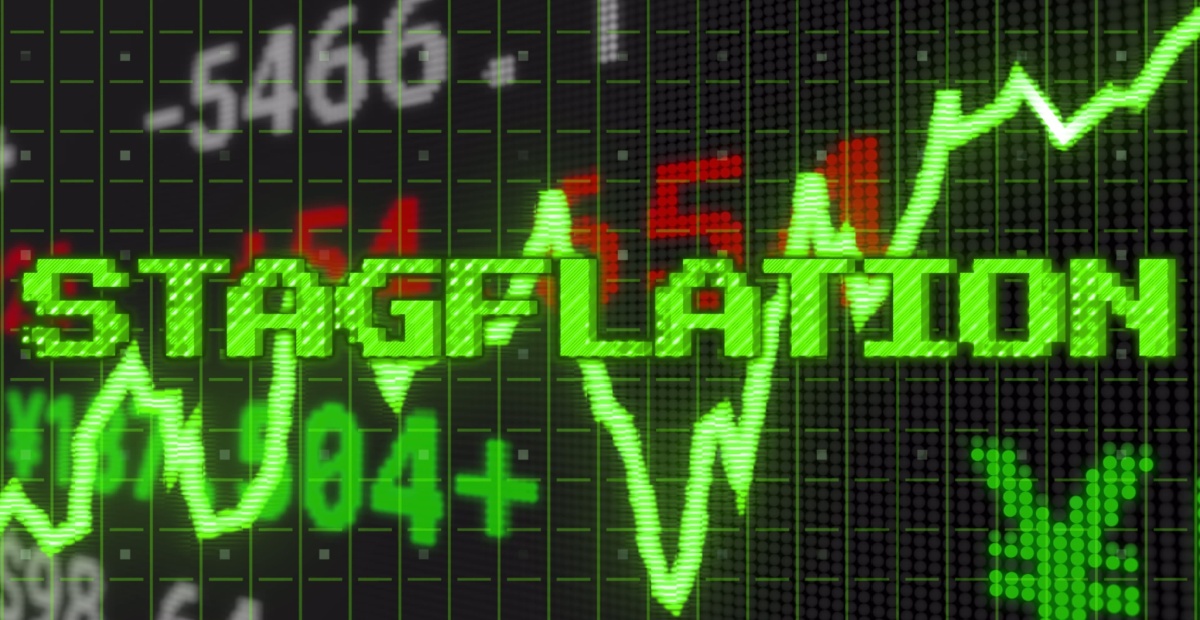
I’ve never been a Harry Potter fan, but it seems to me that stagflation is a lot like Voldemort. “He who shall not be named”.
In her recent appearance at the AFR Business Summit, Reserve Bank Governor Michele Bullock highlighted what a fluid environment we are in. She warned that conflict in the Middle East could result in either higher than anticipated inflation from the reduced supply of oil and LNG, or reduced economic growth if it were to be a prolonged conflict. Much softer economic growth could occur as consumers have less money to spend generally after accounting for the rising costs of necessities she said.
She did not however canvas the possibility of both outcomes occurring simultaneously – Stagflation.
Despite protestations to the contrary by the Prime Minister and our Federal Treasurer, Australia is not in a particularly strong position to weather this global storm.
- Federal spending is at record levels as a percentage of GDP and there seems little appetite to curb it. The default approach seems to be to look for more revenue via increased wealth taxes.
- Our national debt is close to 1 trillion dollars.
- Current unemployment may be low at 4.1% but most of the recent employment growth has come from government and related services. If Ai does indeed deliver, the private sector may be even less inclined to hire in the future.
- Inflation is well above the RBA’s target band and rising. Global events place the risk firmly to the upside.
- Australia has clear problems with social cohesion, which only exacerbates economic tensions.
While Stagflation is not a central case by any stretch of the imagination, it is certainly far from a non- zero outcome. Significant supply shocks to critical imports are certainly a strong precondition for it. If I had to assign a probability that Australia will face mild stagflation it would be somewhere in the range of 15 to 20% over the next 12 to 18 months.
The Inflation Problem
The term helicopter money was coined by Milton Friedman way back in 1969, but was popularised when Ben Benake headed up the US Federal Reserve and was dealing with the global financial crisis. As well as cutting interest rates to zero, the Federal Reserve acted as a backstop by flooding the economy with cash which became known as quantitative easing (QE).
Australia is in the grip of a similar phenomenon at present, but it is not our Reserve Bank dumping money from the helicopter. It is State and Federal governments. Money is flooding into the economy to fund a ridiculous level of expenditure. From the virtually unchecked growth in the NDIS to pet projects such as the suburban rail loop in Victoria and generous subsidies for solar and wind projects. The list goes on.
Australia is already facing a mild rise in inflationary pressures from the utter failure of the push towards net zero emissions to reduce or even stabilse electricity prices combined with flatlining productivity in an over-regulated labour market which is experiencing no real wages growth.
If unions feel emboldened by the vastly increased ability to enforce pattern bargaining in order to seek real wage increases in this environment, then the risk of prolonged inflation increases significantly. Witness the latest push by the ACTU to enshrine 5 weeks paid annual leave into awards with no productivity offset. This would simply increase the cost of doing business from an already high base and result in these costs being passed on through higher prices wherever possible.
At the recent economist’s round table convened by the Treasurer, a vast majority of attendees flagged the unsustainable level of Government spending and that this was contributing to inflationary pressures. While there appears to be some growing recognition of this at senior Government levels, the approach to date appears to be one of seeking to increase tax revenue rather than meaningfully cut back spending.
This began with the disastrous proposal to tax unrealised gains in superannuation above $3m which was eventually abandoned. The focus now appears to be on significantly cutting the capital gains tax discount for assets held for more than 12 months and hitting investor’s ability to negatively gear rental property. While not necessarily bad policy, each proposal has its own potential knock-on effects. The first potentially reducing productive investment and the second compounding the shortage of rental properties.
Unfortunately, current world events are likely to multiply inflationary risk factors for the economy as a whole. On top of reckless government spending at home, Australia (and the world) faces cost push inflationary pressures from the collapse of the rules based order in global trade (Trump tariffs) and the war in Iran.
While Iran accounts for a mere 4% of global oil supplies, 90% of this is purchased by China. Even if the current regime in Iran fails to seriously disrupt the flow of oil and gas through the straits of Hormuz, disruptions to Iran‘s oil production must inevitably flow from the attempted regime change. Consequently, China will be forced to find an alternate supplier, which has the potential to force up global oil prices further.
In addition, Iran’s missile and drone attacks on their Middle East neighbours have temporarily caused Saudi Arabia to cease production at its largest oil refinery. It is the largest exporter of crude oil globally. Qatar which produces just under 20% of the world’s LNG has also halted production which recently saw European prices spike by circa 50 percent.
Forces for the Stagnation of Economic Growth
Evidence that the cost of doing business in Australia is making us uncompetitive on the world stage is growing. This stems from the costs of employing labour, flight of investment capital offshore and the onerous rules and regulations which industry must comply with. A trivial but instructive example of this last point was a recent article in the Canberra Times which noted that to open a café from scratch in either Victoria or Tasmania required obtaining 30 different licences! There is much discussion about reducing red and green tape at a state and Federal level for major new projects, but at this stage relatively little action.
Add to all this the impact from the AI revolution.
As Howard Marks from Oaktree Capital Management notes in his recent analysis, the risk to society is speed. Speed at which AI is deployed, adopted and displaces significant numbers of employees. The adaption pressure means that it is very different to previous technology disruptions which often took years to have significant impacts and allowed time for society to adjust.
We are beginning to see the employment impacts within tech companies from the rise in AI, with Block retrenching 40% of its workforce (circa 4,000 roles) and Wisetech looking to reduce its staff by 2,000. These companies are at the bleeding edge of the AI revolution as many coders become replaceable. But fast on their heels will be other white collar service industries such as insurance, banking and of course the legal profession.
Employment impacts will be compounded by their widespread nature and the increasingly entitled mindset of western consumers who expect their governments to deliver a solution (ie: bail them out). How this plays out is unknown but almost inevitably involves an even greater debt burden for future generations to shoulder.
The final word
Whether or not stagflation turns out to be our fate in the next 18 months depends on one thing; timing. Do we encounter the perfect storm? Are cost push inflationary pressures from a prolonged rise in oil and gas prices, general transport costs, and ongoing electricity price rises combined with the steady march of medical and education expenses in the 7 to 10% range the norm? Do we simultaneously enter an environment where companies seek to replace large swathes of their workforce with AI bots and the like? While the productivity drought may turn to a flood if AI delivers on its hype, the economic outcome may be worse overall.









Outstanding piece of common sense reading and placement of thought – not bloated with jargon. Well Done Matt Drennan.