
Discretionary trust consultation confirms expanded rollover relief

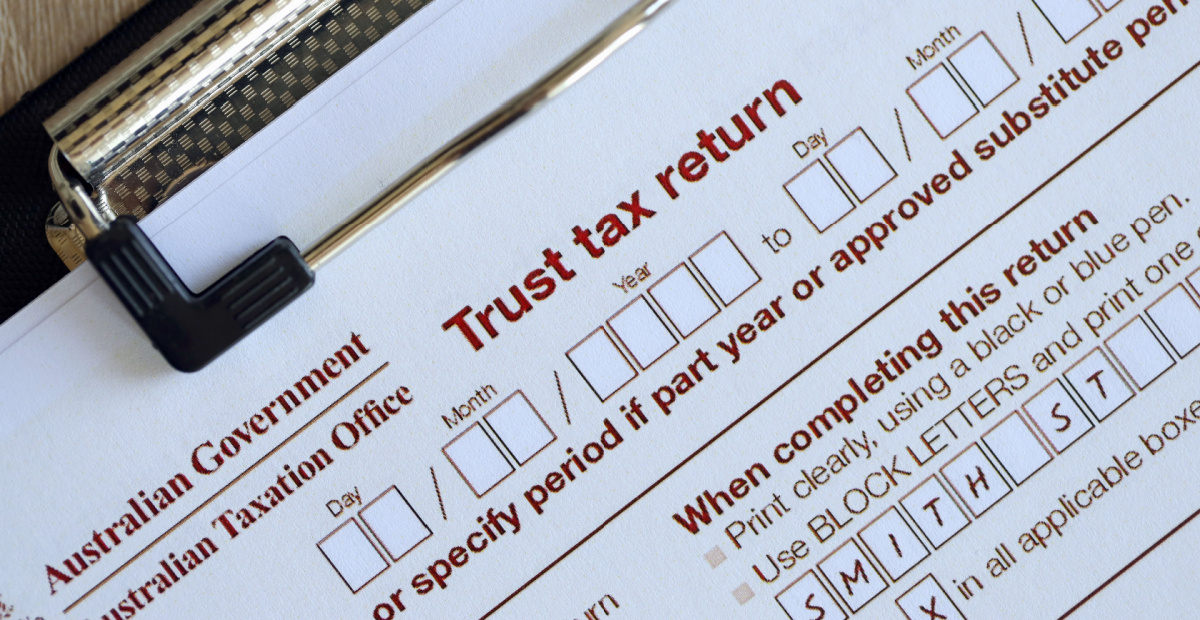
The Treasury has opened up consultation around the Government’s Budget changes to the minimum tax applying to discretionary trusts, pointing out expanded rollover relief to assist businesses to exit the structures.
The changes will see a 30% minimum tax applied to discretionary trusts from 1 July, 2028. The Treasurer, Jim Chalmers, claimed “the reforms are all about making the tax system fairer by better aligning the tax rate on trust income with tax rates paid by workers, and will help fund income tax cuts for workers”.
Stakeholders have welcomed the consultative process but major accounting group, CPA Australia quickly raised the question of states stamp duty and the need for coordination with the states.
The consultation paper argues that less than 15% of all active small businesses operate through a discretionary trust structure, and that more than 90% of all active small businesses in any given year will not be affected by the changes.
It says the Government will provide expanded rollover relief to assist businesses and others to restructure out of discretionary trusts to other types of entities, for example a company or a fixed trust, without capital gains and other immediate income tax consequences applying.
The relief will be available for a period of three years commencing from 1 July 2027.
“Businesses that choose to restructure into a company will be able to retain income at the corporate rate, but companies cannot access the capital gains tax discount or indexation.
“Companies do benefit from access to dividend imputation and a lower 25 per cent corporate tax rate where their aggregated annual turnover is less than $50 million and no more than 80 per cent of their assessable income has passive sources,” it says noting that “companies also provide simpler ways to access debt financing and to introduce new equity”.
The consultation paper says the minimum tax will only apply to discretionary trusts, which provide greater planning opportunities than other types of trusts.
It says the current tax framework defines discretionary trusts by exclusion – “as any trust that is not a fixed trust”.
Reacting to post-Budget feedback, the consultation paper says that, as part of the development of the minimum tax, consideration will be given to how to appropriately define a discretionary trust.
“Since the 2026-27 Budget announcement, some stakeholders have provided feedback that relying on the existing definition of fixed trusts may result in the scope of discretionary trusts for minimum tax purposes being broader than intended,” it said.
It said that, on this basis, feedback is being sought on appropriate treatment of cases such as modern commercial trusts, where trustees typically retain powers to change entitlements, add beneficiaries, or amend trust deeds, whether or not those powers are exercised.
The discussion paper notes that the minimum tax will not apply to other types of trusts, such as fixed trusts, widely held trusts, complying superannuation funds, special disability trusts, deceased estates and charitable trusts.
It said some types of income, such as primary production income, would also be excluded from the minimum tax.









I HAVE NO ISSUE WITH THE TAXATION OF TRUSTS AS LONG AS THE TAX PAID AT 30% CAN FLOW THROUGH…
Heard nothing about non business assets. Assuming they are just going to strand these assets by moving the goal posts.…
If this was in when I started I would be gone by now. Even now, the 2024 FY is nearly…
So every time you expand this you inadvertently expand the cost of the CLSR which is already unsustainable and unaffordable…
Spot On, Phil's high horse hey