
CSLR pressure – 79% of advisers planning to lift fees


The Financial Advice Association of Australia (FAAA) has revealed a survey of its members leaves no doubt that financial advisers will be passing on the increased costs generated by the Compensation Scheme of Last Resort (CSLR) to clients.
As well, FAAA chief executive, Sarah Abood said the survey results suggested the higher CSLR levies would accelerate the exit of advisers from the profession.
Releasing the results of the survey, Abood said it showed that nine out of ten advisers expect the levy to increase the cost of financial advice, as firms move to pass on the impact of a potential $4,000 per adviser bill.
In addition, 70% of advisers believe the CSLR levy will result in a reduction in adviser numbers.
The FAAA has made the results of the survey public less than a week out from the Federal Budget, but the time-table around Treasury consultations and reviews of the CSLR means that any changes will likely be at least six to nine months away, at the earliest.
Abood said advisers are calling for the government to make significant changes to the CSLR scheme including:
- 79 per cent want the cost of any special levy spread across the financial services sector on a more even basis
- 63 per cent want to cap the total amount paid by the advice sector, and
- 74 per cent are calling to change AFCA rules to better allow investors to make complaints against the management of MISs and superfunds as a whole.
The FAAA CEO said the survey findings highlight the growing disconnect between the intent of the CSLR and its real-world impact.
“The clear message from advisers is that the CSLR levy will be felt not just by advisers but also by consumers – through higher advice costs and reduced access to advice.
“The financial advice profession is made up primarily of small and micro businesses, with just over 15,100 advisers spread across 6,073 practices – an average of only 2.5 advisers per practice. These small businesses have little ability to absorb large additional costs.
“We are already seeing signs that the levy is affecting both retention of existing advisers, and the pipeline of new advisers. A continually shrinking profession will have long-term negative consequences for access and affordability of advice for everyday Australians.”
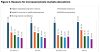
Highlighting a growing risk to the sustainability of the profession, nearly seven in ten advisers (69%) expect a material hit to profitability, with 32% forecasting a major impact of more than 10%.
To offset the cost, 79% of advisers say they will be forced to increase client fees. Others are considering scaling back investment in people, with 36% planning to reduce new adviser appointments.
Further, almost half (44%) report knowing colleagues who are planning to leave the profession as a result of the impact of CSLR, and 9% say they intend to exit themselves, raising concerns about access to affordable financial advice at a time when demand is rising.
“There is strong support amongst advisers for a more balanced and sustainable funding model. Financial advisers should not be bearing a disproportionate share of the cost for failures that occur elsewhere in the system when products collapse, and they should not be paying for the misconduct of a tiny minority of advice businesses that have done the wrong thing,” Abood said
“We support the principle of compensation for consumers, but the scheme must be fair, sustainable and not undermine the ongoing viability of the advice profession.”









so for someone who has already exchanged contracts on an off the plan build in an SMSF that doesn't settle…
My Dear Comrades....I don't think the Public Servants in the Department of Red Tape really care about "challenges".
Gender Super Gap is rather pointless as a measure of inequity when it only considers one part of a persons…
The problem with the left is not just their identity politics, but that they think the government must provide everything…
Arrogant Snake Chalmers