
Financial services still footing the Royal Commission bill


ANALYSIS
Nearly five years on from the Royal Commission into Misconduct in Banking, Superannuation and Financial Services it is worth reflecting that not all the resultant prosecutions succeeded but financial services companies are still paying the bill.
While, as others have written, the Royal Commission changed the face of the financial service sector, it is also true that this could hardly not have been the case in circumstances where the former Treasurer, Josh Frydenberg, sought to implement virtually all of its recommendations.
Frydenberg’s immediate response to the final report was a commitment to “taking action on all 76 Royal Commission recommendations and, in a number of key areas, going further” and to implement the necessary legislation by the end of 2020.
So, while Treasury got busy working on the legislative changes, ASIC and APRA got busy working on the Royal Commission referrals and the end result has been a raft of legislation encompassing everything from increased powers for ASIC, and a Single Disciplinary Body to the Compensation Scheme of Last resort with the costs almost entirely borne by the industry.
And the legal costs have been carried by the industry irrespective of whether the prosecutions proved successful.
Worth considering in that context is that while ASIC successfully pursued a number of prosecutions resulting from Royal Commission referrals, it also suffered a notable failure in its pursuit of the Commonwealth Bank and Colonial First State Investments for allegedly breaching conflicted remuneration laws.
Not only did ASIC lose its initial case in the Federal Court it also lost on appeal in the full Federal Court.
Then, too, the Australian Prudential Regulation Authority (APRA) lost one of the most high profile cases referred out of the Royal Commission against IOOF Limited (now Insignia) and its then managing director, Christopher Kelaher, over the appropriate use of superannuation fund reserve.
The Federal Court dismissed APRA’s action against IOOF entities, directors and executives and, ultimately, APRA decided it would not be appealing the matter.
At the time, former APRA deputy chair, Helen Rowell said that the judgement had “nevertheless raised some issues of wider importance for APRA in its supervision of superannuation trustees”.
Similarly, nearly four years later, ASIC deputy chair, Sarah Court, acknowledged that the FulL Federal Court had dismissed ASIC’s appeal against the Federal Court’s earlier decision with respect to CBA and Colonial First State investments but justified ASIC’s actions by saying, “While the Full Court dismissed the appeal it accepted a number of ASIC’s submissions and, importantly, clarified the meaning and reach of the conflicted remuneration provision for future matters.”
The Royal Commission’s final report directed plenty of work towards ASIC and APRA with the latter acknowledging that it had received 12 referrals “relating to misconduct that had been identified as being potentially serious and warranting further investigation”.
However, it went on to note, “The bulk of the referrals APRA received related to historic conduct which has largely been remediated, and as such cannot be subject to civil penalties. Nonetheless, APRA has used its supervisory powers to ensure that underlying prudential issues and root causes are addressed and to prevent this type of misconduct from recurring”.
For its part, ASIC received 13 referrals from the Royal Commission for investigation and noted that in addition to the referrals the Royal Commission had examined additional case studies 32 of which led to ASIC investigation.
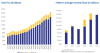
Under the ASIC industry funding model, as it currently exists, the cost of litigation is apportioned to the sectors it traversed, irrespective of whether the regulators action succeeds or fails.









If this money was actually redirected towards investors (beyond compensation orders), the CSLR would not be required. But no, it…
I once commented in one of these forums that the then AFA should act more liike a professional union –…
Absurd. The proceeds of ASIC actions should go towards their costs with anything leftover put towards the CSLR.
ASIC is out here boasting about $830 million in civil penalties for 2025-26 while hitting AFS licensees with yet another…
Despite being so qualified (masters not CFP) you seem to miss the point. Why pay to do the CFP program…