
Van Eck, SpaceX and lessons from history

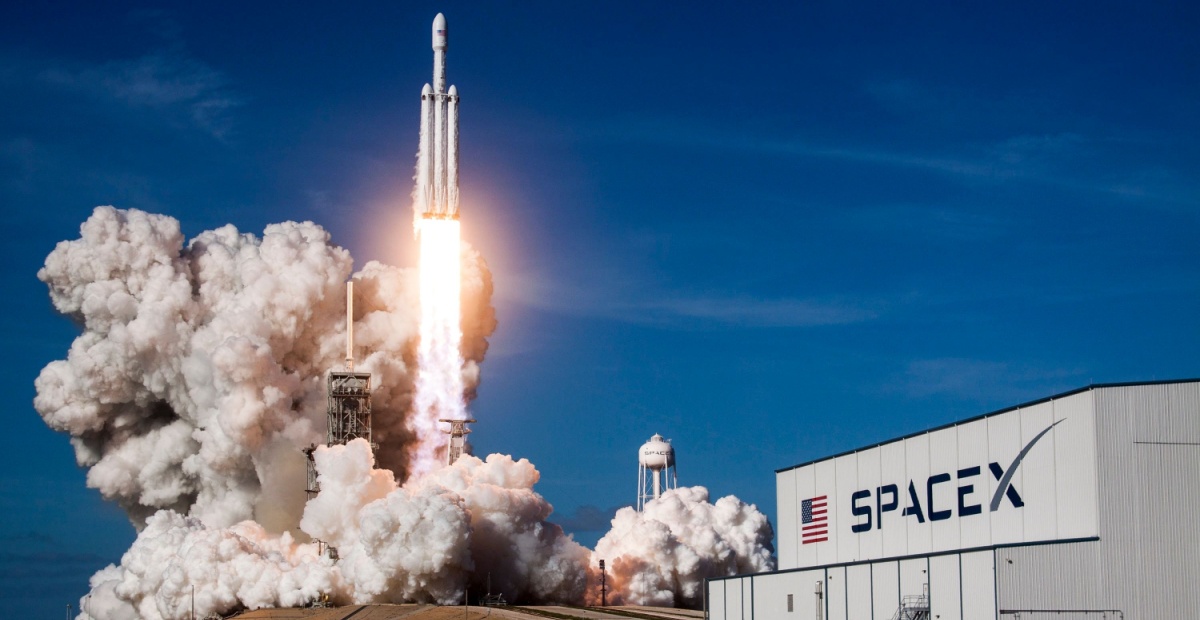
Don’t be too quick to read investor excess into the SpaceX US$75 billion initial public offering, according to investment manager VanEck.
It suggests that rather than excess, it may reflect a much older pattern when markets “repeatedly struggle to price companies building the future before the future becomes obvious”.
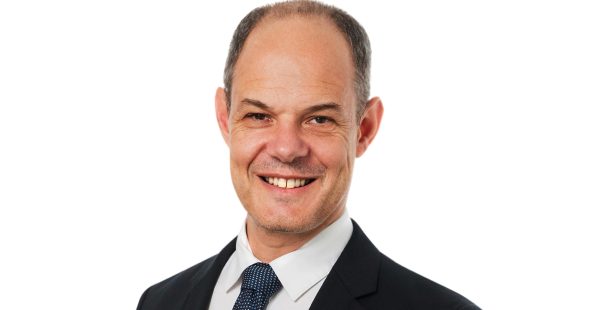
Van Eck chief executive and managing director, Arian Neiron says financial markets have always struggled to price the companies that go on to reshape an industry.
“They tend to look too cheap early on, too expensive once they mature and difficult to value at almost every stage in between,” he said.
Neiron says VanEck has spent more than seventy years investing across market cycles.
“In that time, we have observed many founders who spoke the language of science fiction go on to deliver it, and some who didn’t. We have watched respected sell and buy side analysts declare paradigm-shifting companies overvalued at one-tenth of what they eventually became. We have also witnessed the reverse.
“The lesson we keep relearning is not that the market is irrational. It is that the market is rational about the wrong time horizon,” he said.
Neiron went on to cite Henry Ford and the evolution of the motor industry, Radio Corporation of America (RCA) and the boom in radio, and more recently the post-war listing of IBM and Xerox which he said had taught markets to price intelligence.
He then noted the internet era “when the market priced the infastructure before the revenue”.
“When SpaceX listed on Nasdaq last week at an IPO valuation of US$1.77 trillion (and closed with a US$2.1 trillion valuation), raising US$75 billion in what is now the largest IPO in history. It dwarfed Saudi Aramco’s US$29.4 billion in 2019, and the financial community reacted with its usual combination of awe and discomfort. Awe at the audacity. Discomfort at the math.
“We think it is worth trying to do the math. Because we think some of it has been lost to the hype.
“SpaceX’s Starlink division, its satellite internet service, had roughly 9 million subscribers globally entering the year, climbing to 10.3 million by the end of the first quarter. Its user base spans people in remote rural communities, private enterprises and government agencies, with major markets in the United States, Brazil, and Australia. Starlink generated approximately US$11.4 billion in revenue in 2025, up nearly 50% year over year, and now accounts for more than 60% of SpaceX’s total revenue. This is all from a single product line. The company’s launch business, which has pioneered Falcon 9 and Falcon Heavy, and the rapidly scaling Starship, represents a fundamentally different cost structure for orbital access than any of Space X’s competitors have yet achieved. The price to orbit per kilogram has dropped more than 95% since SpaceX launched. That cost compression is not incremental, and it could potentially prove civilisational.
“At US$1.77 trillion, or now US$2.1 trillion, SpaceX trades at roughly 60 times projected 2026 revenue, a multiple that is aggressive by any conventional measure. But if the last one hundred and twenty odd years have taught us, the comparables being Boeing, Lockheed Martin, and Airbus may be the wrong ones. A closer analogue could well be Amazon Web Services in 2006: an infrastructure business with near-zero marginal cost at scale, serving a market with a potential ceiling, on an optimistic hindsight reading is vast.
“It’s important to be mindful that the bear case is real and deserves respect. Regulatory risk for a company dependent on launch licenses and spectrum rights is real. Musk’s political engagements have introduced reputational volatility that is difficult to model. The Starship development program has a failure rate that would bankrupt any publicly traded aerospace company operating under conventional board governance. Finally, the transition from private to public markets introduces accountability structures that Musk has historically found constraining.
“The bull case is equally real: if Starlink reaches 30 million subscribers, a number that we think is plausible within five years at current growth rates, the recurring revenue justifies a large part of the current valuation. If Starship achieves the launch cadence that the SpaceX team projects, the margin structure of the launch business transforms into something no aerospace analyst has a model for, because nothing like it has existed before.
“If our experience offers any lesson, it is that when something has no precedent, the closest available comparable can mislead,” Van Eck said.








ASIC have ignored property marketers flogging properties to SMSF's for years, this won't change because of the budget. All of…
FAAAAAAAAAAAAAAAAA sound like an ISF mouthpiece. ASIC need to stop SMSF Property spruikers, I have handed them a case for…
Seriously FAAA? How about you focus on the detriment of CGT and negative gearing changes to share portfolios and stay…
No - no carve outs for accountants. If they want to provide financial advice, they can jump through all the…
Many accountants already provide bucket loads of illegal AFSL Super / SMSF Advice and ASIC do nothing about it. Accountants…