
History lesson for Aussie policymakers managing data centre boom

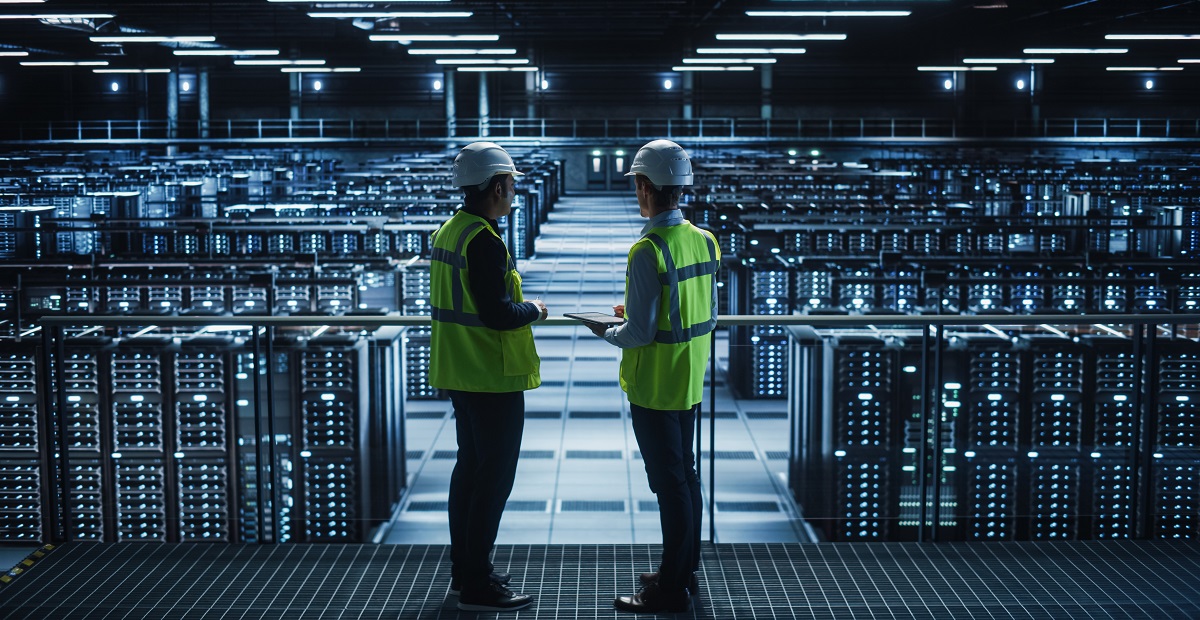
New commentary from HSBC has highlighted the lessons history could teach Australia’s policymakers when it comes to managing the current data centre investment boom, given the similarities to the liquefied natural gas (LNG) boom seen in the early 2000s.
Chief Economist, Paul Bloxham, noted that while the comparison was not “perfect” the similarities were difficult to deny, as both booms “draw heavily on local energy supplies once completed, are highly import-intensive in the investment phase, have high-foreign ownership, employ few workers, particularly once operational, and make products (gas and compute) that are growth drivers whether used locally or exported”.
“Australia has one of the largest data centre investment booms in the world currently underway. Estimates available from Australian Energy Market Operator suggest the investment pipeline is worth AUD97 billion, which is around 3.4% of GDP. Australia has 1.4 gigawatts of capacity and AEMO estimates show applications for another 5.4 gigawatts.
“A key question is how much of Australia’s economy will benefit from this boom? The near-term benefits are limited. Although business investment has surged, 85% of the equipment used is imported, so there is little near-term boost to local GDP growth. Imports of IT equipment have surged, including of semiconductors, hard-drives and cooling systems, mostly from Asia, driving Asia’s exports.
“The longer term growth story will partly depend on what the data centres are used for. How much data centre use will be directly for local purposes, versus global use of ‘compute’, is, so far, unclear.
“Whether it significantly benefits the local economy will partly depend on successful A.I. adoption by local businesses that lifts their productivity. So far this has been slow. Most large businesses and government departments have an A.I. strategy in various stages of implementation, but it is early days.
“Amongst small and medium size enterprises in Australia, which employ around 70% of the workforce, more than half report in surveys having no A.I. use, while only 6% say they have ‘broad’ A.I. use. The key, of course, even if A.I. is used, will be genuine evidence it is lifting productivity.”
Bloxham said the rhetoric surrounding the data centre boom has also raised questions over resource use, intensifying concerns over the large amounts of energy and water absorbed by the infrastructure.
“Industry estimates suggest there is not enough available energy and water to support the data centre build out. On CBRE estimates there will be a 40% shortfall in energy needed by 2028.
“If the data centres draw energy and water out of existing supplies, with insufficient additional investment in supplies, they will likely put upward pressure on the prices of these resources – potentially crowding out other industries and also affecting the cost of living for households and input costs for other firms.
“In addition, the data centres themselves will employ very few workers, particularly once they are operational, so there is little job creation. If A.I. adoption leads to streamlining of workforces, this could also be a negative for jobs growth.”
Bloxham noted that the LNG investment boom amounted to approximately $300 billion for the Australian economy over five years
“When LNG exports ramped up, it boosted GDP growth. But with high foreign ownership, much of the profit flowed offshore. Tax revenues were have boosted, but depreciation of the capital invested in was a large offset to tax liabilities.
“At the same time, LNG sales offshore – not possible before the LNG investment boom – drove low local gas prices up to higher global levels, leaving local gas-reliant industries less competitive. In a perhaps striking similarity with data centres in this regard, ‘compute’ is measured in gigawatts – a measure of energy.
“There was a rich debate in Australia during the early 2000s resources boom about the possibility of so-called ‘Dutch disease’. This is when high investment in one sector crowds out other sectors, partly through a stronger currency. And about a higher mining tax as a way of saving the returns from the resources boom for future generations.
“Australia no doubt benefited from the LNG boom overall, as it drove exports and tax revenues. But there were winners and losers. And, in retrospect, key questions about whether the tax system settings were appropriate and whether more gas should have been held in reserve for local use. These are still issues today. Indeed, a higher gas tax and carve outs of gas for local use are both part of the current national discussion.”
Bloxham said there is a raft of issues policymakers should “carefully” consider when it comes to forecasting the local economic impact of the data centre boom and ensuring its success.
“For the data centre boom then, in addition to the host regulatory issues A.I. is creating, policymakers ought to carefully assess the implications for local energy and water, what this will mean for other industries and communities, and whether the benefits of having lots of data centres are sufficiently large to warrant the costs. Tax and regulatory policy are both important, and setting the ground rules early has benefits.
“It seems clear that energy (and water use) policies are key priorities. Of course, there could be great opportunities. If Australia could more rapidly become a renewable energy ‘super-power’ this could be a key support for also being a large and successful global A.I. player.
“Much depends on getting energy policy settings right. Data centres are energy-hungry – it turns out they measure data centre capacity in gigawatts for a reason.”










The good old ACTU mafia are back in town. The criminal arm of the Labour Party with their bookie mates…
These Government clowns can't do their own job but want more and more involvement in our lives. Just go away…
This is clear signalling by union industry ponzi superfunds that ASIC is in their pocket. When have you ever seen…
MIS frozen, failed and frauded for over $40Billion for 25 years and ASIC pull the blame Advisers card yet again.…
CFMEU corruptly pockets $15 Billion from VIC big build. This $15 Billion corruption figure is likely to be chump change…