
Successfully riding the investment roller-coaster

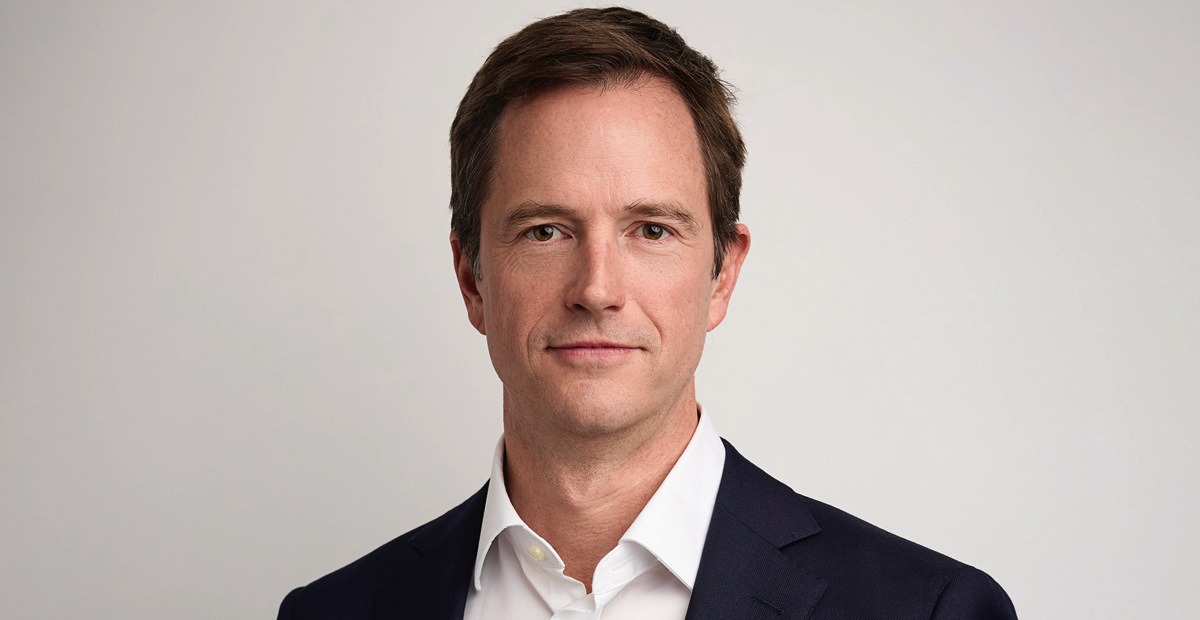
When it comes to having skin in the game, Drummond Capital co-founder and Chief Investment Officer, Nick Reddaway has revealed just how committed he and the Drummond team are in this investment manager profile.
Drummond Capital Partners are accessible via the BT Panorama platform and Managed Accounts Newswire asked Reddaway to explain the Drummond investment philosophy and approach.
- What is the strategy and what do you aim to achieve?
We manage global multi asset portfolios across traditional risk profiles for financial intermediaries via managed accounts. Whilst many of our portfolios are managed relative to traditional risk-profile benchmarks, we also manage portfolios to specific client outcomes and objectives. For example, one portfolio is designed with a CPI+ return objective alongside a secondary goal of limiting drawdowns to less than 10% in negative market environments.
We also work closely with advice practices on tailored portfolio solutions, where portfolio design may be risk-profiled, goals based, or built around the specific needs of their client base and investment philosophy.
Ultimately, across all portfolios, our aim is to outperform relevant benchmarks in a risk aware manner through lower volatility and smaller drawdowns. Since inception, we have achieved that across all risk profiles.
- How long have you personally been responsible for it?
I am the co-founder of Drummond Capital Partners and have been CIO since inception 9 years ago.
- How much of your personal wealth is invested in the strategy, and how do you think about co‑investment as part of your alignment with clients?
Outside of my house, all of it is in Drummond portfolios. The team were the seed investors in each portfolio we have launched, and I remain invested across the traditional risk profiles as well as our private markets SMA. I think it’s very important for our clients to know that their investment managers have the conviction to be along for the ride with them. Not all staff contribute to the management of the portfolios, but they do to overall client satisfaction and ultimately the success of the business, so we align all staff via an equity program which ensures the whole team is working to drive better outcomes for our clients.
- What is the benchmark and how have you performed relative to it?
Our benchmarks are the relevant risk profiles supplied by FE Analytics, which capture performance across a broad range of institutionally managed retail super funds. Since inception, we have outperformed our benchmarks while also delivering lower volatility, which we believe is a strong outcome for clients.
More broadly however, we don’t view performance in isolation. For advice firms today, the value equation is much wider than returns alone. We have always positioned Drummond as an end-to-end managed accounts partner, combining portfolio management with governance support, implementation, reporting, communication and broader practice support to help advisers deliver a better client experience.
- Right now, what are the major risks you worry about?
We are extremely positive on the impact AI will have on the global economy in the decades ahead – it’s the biggest technological innovation since the internet. There are many related areas of the market however where prices have gone parabolic. Normally that ends in tears. With index concentration where it is today that’s a real risk, alongside all the related party deals across the ecosystem. Government debt is too high everywhere and we are moving to a multipolar world. The rest of the world will be more hesitant to fund US deficits when it goes it alone on geopolitics.
Domestically, we are really worried about the trajectory of productivity growth and the overall economy. Successive governments have papered over the cracks with excessive immigration, but that has had big implications for house prices, and the implied social contract with younger generations now looks fundamentally broken. What hope does a 20 year old in Sydney have have of matching the living standards of their parents?
- The past three years have been pretty tempestuous. How has that impacted the portfolio and how have you responded?
You could argue the last six years have been a roller coaster since Covid, with market volatility, the rise of inflation and interest rates, and extreme shifts in style performance. Pleasingly, over the last three years all of our portfolios have outperformed their benchmarks.
There have been periods where our investment process has detracted from relative returns, such as late 2022 when the widely expected recession never eventuated, or more recently managing risk through Trump’s tariff policies. However, no investment process wins in all markets and the important thing is the cumulative impact of decisions over time.
Our tactical process also led to actively tilting portfolios away from concentrated style-biased managers, while recognising the improving global earnings trajectory over the last year, resulting in an overweight equity position that has delivered strong outcomes for clients.
- What could cause your strategy to underperform and how long could that persist?
We are a multi asset portfolio with exposure to many asset classes and underlying managers. Significant drawdowns, particularly in major asset classes like equities, would hurt returns, although historically those periods have also tended to lead to our strongest periods of outperformance versus benchmarks.
If markets were to enter an extended speculative “junk rally”, we would likely not capture all of that upside given our risk aware approach. That would primarily be a relative issue however, as portfolio outcomes would still likely remain positive for clients.
- How do you validate your thesis when markets move against you or a manager selection disappoints?
We have a strong quantitative approach to SAA and TAA which helps reduce market noise, and our tactical process is explicitly designed to avoid zigging when markets are zagging. It’s not always possible to be on the right side of every decision, but we are very open to the fact we can be wrong and try to listen carefully to what markets may be telling us. We avoid becoming too dogmatic or having our heads stuck in the sand for too long.
We are also active in manager oversight. Given the large swings in style performance over recent years, there have been periods where we have embraced both growth and value managers for extended periods. Equally, we will move on managers where stock selection weakens over time, team turnover creates uncertainty, or portfolio positioning becomes excessively contrarian and increases the risk of poor client outcomes.
- Does the portfolio have any biases, or is it concentrated in any way, by design?
No, we are agnostic to style and believe in maintaining a reasonable level of diversity across managers and asset classes to ensure portfolios can withstand a wide range of economic and market scenarios. As mentioned, we have tilted towards growth and value managers at different times over recent years and have maintained a long-term overweight to Australian credit relative to bonds, although that positioning will change when necessary.









MIS have been frozen, frauded & failed for 30 years to the tune of $$$$Billions and some Govt & ASIC…
"With the latest data showing Australia has roughly 338,000 accountants, ~15,000 financial advisors, and ~6,500–7,000 mortgage brokers, the disparity in regulatory pressure is…
Not sure if the FSC analysis covered this, but the 30% minimum rate won't just apply to investor sales. It…
You lost me at SMC. Urghhh.
Nothing unexpected -this is what you get when the voices that matter most are a preferred circle of trustees linked…